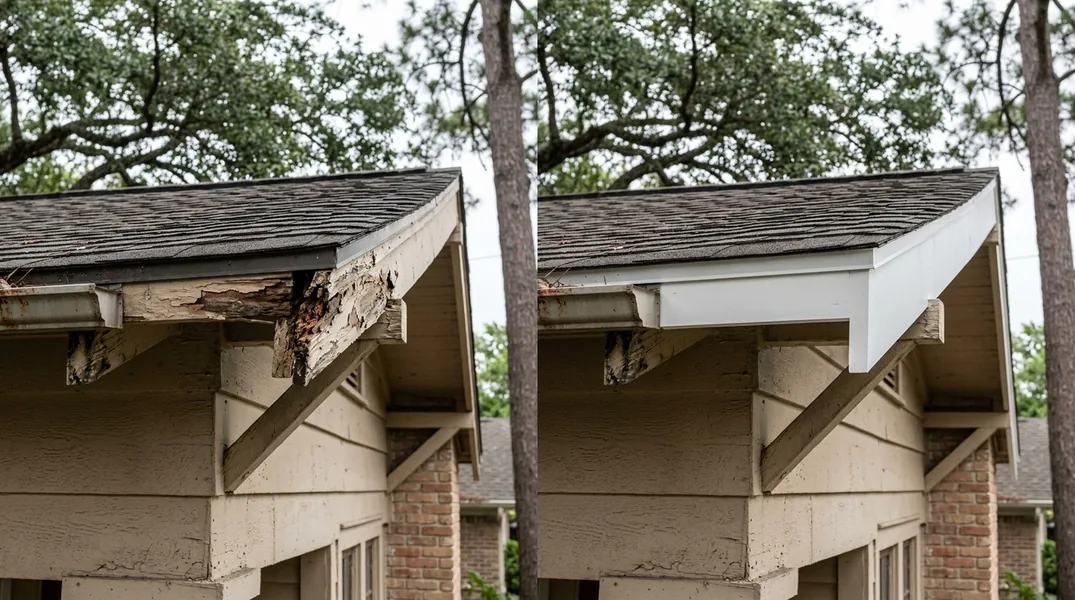
The Charm and Challenge of Houston Heights Bungalows
Houston Heights bungalows are architectural treasures. Built primarily between 1900 and 1930, these craftsman-style homes feature distinctive details: deep eaves, exposed rafter tails, decorative brackets, and wrap-around porches. If you own one of these beauties, you already know they turn heads. What you may not realize is that their age and character come with a serious responsibility: wood maintenance.
The Houston climate is not kind to wood. Our hot, humid summers followed by wet winters create the perfect environment for wood decay. The very wooden elements that make your bungalow charming, from the front porch columns to the exterior trim, are under constant assault from moisture, insects, and UV exposure. Many homeowners discover this truth only when they spot soft spots on their siding or notice their trim beginning to fail. By then, the damage may have already spread deep into the structural framework.
Understanding Wood Rot and Dry Rot in Historic Homes
When people talk about wood problems in older homes, they often use the terms interchangeably. But wood rot and dry rot are distinct issues, and understanding the difference matters for your bungalow's future. Wood rot, also called wet rot, occurs when moisture penetrates wood and fungal spores begin to break down the cellular structure. It thrives in damp conditions and is actually more common in Houston than dry rot because of our climate. You will typically see discoloration, soft spots, and sometimes visible fungal growth.
Wood Rot & Dry Rot Repair requires careful diagnosis because the visible damage is often just the tip of the iceberg. Moisture travels through wood, and decay spreads internally before you notice anything on the surface. Dry rot, despite its name, also needs moisture to start, but it can spread more aggressively because it doesn't require constant dampness. It often appears as a brown, cubical cracking pattern and can affect larger areas of wood more quickly. Both types weaken the structural integrity of your home, and both are common in Houston Heights bungalows that have not received regular maintenance.
Why Craftsman Bungalow Repair Demands Specialized Attention
Not all carpenters understand how to properly repair a craftsman bungalow. These homes have specific architectural details and building methods that differ significantly from modern construction. Your bungalow likely features solid wood siding, wooden window frames, wooden porch supports, and decorative trim work that are integral to both its beauty and its structural system. When damage occurs, simply replacing sections with modern materials or generic repairs can actually diminish the home's character and resale value.
Proper wood siding repair on a craftsman bungalow requires matching the original profile, grain, and finish. Exterior trim repair must respect the original design intent, not just patch the problem. This is where experience matters. A carpenter who has worked on dozens of bungalows understands how to identify failing sections, source appropriate materials, and execute repairs that look seamless and perform correctly for decades to come. The cost of doing it right the first time is far less than the cost of replacing a poorly done repair five years later.
Identifying Early Warning Signs in Your Bungalow
The best defense against catastrophic wood damage is catching problems early. Walk around your bungalow seasonally and look for these red flags. Soft or spongy siding that yields to finger pressure indicates moisture penetration and decay. Paint that is peeling, blistering, or failing in concentrated areas often signals moisture problems underneath. Check your porch columns, trim around windows and doors, and the fascia boards along your roofline, as these areas collect moisture and are decay hotspots. If you notice visible fungal growth, discoloration that looks like water stains, or wood that appears to be shrinking or pulling away from adjoining materials, do not wait to investigate further.
Interior signs matter too. If you notice soft spots in your floors, especially in bathrooms or near exterior walls, moisture may have penetrated your subfloor. Musty odors in the basement or crawlspace, visible mold, or wood that appears darkened or damp should trigger an inspection. Many homeowners also notice that doors or windows begin to stick or close unevenly when wood in the frame has swollen from moisture or begun to decay. These subtle changes are your home's way of telling you that something needs attention. The sooner you address them, the simpler and more affordable the repair will be.
When to Call a Professional for Wood Rot & Dry Rot Repair Near Me
Some home maintenance tasks are suitable for DIY, but wood rot and dry rot diagnosis and repair are not among them. These problems require professional assessment because the visible damage rarely represents the full extent of the problem. A qualified carpenter will probe the affected wood, check moisture levels, assess structural integrity, and determine whether the damage extends beyond the visible surface. This evaluation determines the correct repair approach and whether additional structural work like Floor Joist & Subfloor Repair is needed.
If decay has compromised a structural element like a beam or load-bearing wall, the repair becomes more complex. In those cases, you may need Beam Replacement & Load-Bearing Wall Removal performed by a licensed professional who understands how to safely support the home during the work. Houston Carpentry serves the Houston area and specializes in exactly these kinds of repairs. If you have noticed any of the warning signs mentioned above, reach out for a free estimate or call (832) 462-7903 to discuss your bungalow's specific situation.
Historic Home Maintenance Houston: Building a Prevention Plan
The best investment you can make in your bungalow is prevention. A solid maintenance plan costs far less than emergency repairs and will extend the life of your home's wooden components by decades. Start by ensuring your gutters and downspouts are clean and functioning properly. Gutters that overflow or are clogged allow water to cascade down your siding and pool around your foundation. Next, inspect your roof regularly and repair any missing or damaged shingles immediately. A small roof leak can lead to massive internal damage if left unaddressed.
Paint and stain your exterior wood on a regular schedule, typically every 5 to 7 years depending on exposure and climate. This protective coating prevents moisture from penetrating the wood fiber. Ensure that grading slopes away from your foundation and that your crawlspace or basement has adequate ventilation and drainage. Keep vegetation trimmed back from your home so that air can circulate and wood can dry after rain. Inside, use exhaust fans in bathrooms and the kitchen to manage humidity, and address any plumbing leaks immediately. These simple habits, combined with periodic professional inspections, will keep your craftsman bungalow sound and beautiful for generations to come.
Looking for a professional carpentry contractor in Houston? Houston Carpentry responds fast for all your carpentry needs.
Get a Free QuoteOur services: Wood Rot & Dry Rot Repair · Termite Damage Repair · Floor Joist & Subfloor Repair