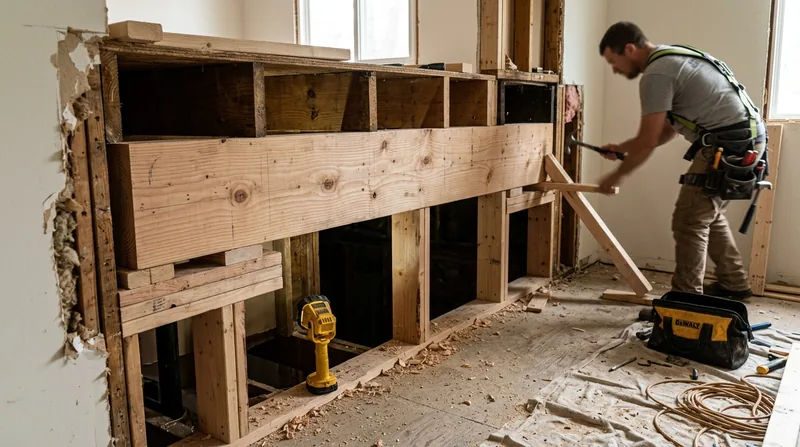




Termite Damage Repair in Houston means replacing the wood that termites have already destroyed. After your pest control company finishes treatment, the damaged studs, sill plates, floor joists, subfloor sections, and trim remain compromised. Here in Houston, where the humid subtropical climate and year-round termite pressure make wood-boring insects a constant threat to our pier-and-beam bungalows, mid-century ranches, and brick-veneer suburban homes alike, structural wood damage from termites is not rare. We replace termite-eaten framing and flooring, working from your pest inspection report to restore full structural integrity. The flat Gulf Coast terrain and expansive clay soils that heave and shrink seasonally already stress foundations and framing; termite galleries in load-bearing wood accelerate that failure. Repair starts with honest assessment of what wood can stay and what must come out.
Why Termite Damage Repair Matters in Houston Homes
Termites do not stop at the surface. They hollow out the interior of studs, floor joists, rim joists, and sill plates, leaving only a thin shell that looks sound from outside. The damage is hidden until a pest inspector probes it or the wood begins to sag, crack, or feel soft underfoot. Houston's warm, moist climate means termite colonies stay active year-round, and the city's older housing stock, especially in the Heights, Third Ward, and Fifth Ward, sits on pier-and-beam foundations where wood framing is fully exposed to soil and moisture. Even newer suburban homes in Katy, Sugar Land, Pearland, and The Woodlands face the same pressure. Once structural wood is compromised, the cost of repair grows with delay.
- We identify which wood can be repaired by sistering in new framing and which sections require full replacement of studs, joists, or sill plates.
- We document the damage with photographs and measurements to support your insurance claim if coverage applies.
- We obtain any required permits from the Houston Building Department or your local city authority before beginning structural work.
- We source lumber that matches the original species and dimension, preserving the integrity of the framing system.
- We complete the repair in a way that integrates seamlessly with existing structure and finish carpentry.
Addressing termite damage promptly prevents secondary failures in adjacent framing and keeps repair costs proportional to the actual scope of harm.
Key info: Termite damage in a River Oaks or Tanglewood estate may involve ornamental trim and custom millwork alongside structural studs, requiring both carpenter expertise and sensitivity to period detail. In a Meyerland or Spring Branch mid-century ranch, damage often centers on the sill plate and rim joist where the foundation meets the framing. We repair both contexts with equal precision.
For more on wood damage assessment and repair philosophy, see our Wood Rot and Dry Rot Repair service page, which covers similar diagnostic and replacement methods.
For official guidance on structural repair permits and inspections in Houston, consult the Houston Planning and Development Department, which oversees building permits and code compliance for structural carpentry work.
How We Repair Termite Damage: Step-by-Step Process
Repair begins with a careful site visit and a review of your pest inspection report. We probe suspected damage areas with a screwdriver or awl to assess the depth and extent of the galleries. We photograph the damage and take measurements. From there, we develop a repair plan that specifies which wood comes out, which can be reinforced by sistering, and what new lumber will be sourced and installed. For load-bearing walls, beams, or floor systems, the Houston Building Department typically requires a permit and often a structural engineer's sign-off. We coordinate with inspectors and handle all the carpentry work to restore the framing to its original load-carrying capacity.
- We obtain a copy of your pest inspection report and any treatment documentation from the exterminator.
- We probe and measure all visible and suspected damage, recording the location, depth, and extent of each gallery.
- We submit a permit application to the Houston Building Department or your local city if structural work is involved.
- We remove damaged wood sections, taking care to avoid disturbing sound framing or creating unintended openings.
- We install new lumber cut to match the original dimension and species, fastening it securely and in compliance with current building code.
- We restore any finish carpentry, trim, or casing that was removed during the repair.
- We schedule final inspection by the building department if a permit was required, and provide you with a completion report.
The entire process is transparent, and we explain what we find and why we recommend each repair step.
Local example: A shotgun cottage in the Fifth Ward shows termite galleries in the front rim joist and two studs in the load-bearing wall that supports the roof. We sister in new pressure-treated lumber alongside the damaged studs, bolt the new framing to the sill plate, and replace the rim joist in full. The repair restores the wall to its original strength and takes about three days with one follow-up inspection by the city.
For related work on floor joists and subfloor systems that often harbor termite damage, see our Floor Joist and Subfloor Repair service.
Repair Methods for Termite-Damaged Framing
| Approach | Description | Best For |
|---|---|---|
| Sistering | Bolt or nail new lumber alongside a damaged stud or joist, sharing the load and reinforcing the original member. | Partial damage to studs or joists where the outer shell is sound and the galleries are internal. |
| Full Replacement | Remove the entire damaged member and install new lumber of matching dimension and species, secured to adjacent framing. | Extensive galleries, loss of section, or damage to critical load paths like rim joists or sill plates. |
| Patch and Reinforce | Cut out the damaged section, install a new piece of matching lumber inset into the original member, and secure with bolts or lag screws. | Localized damage in beams or large timbers where replacement of the entire member is impractical. |
| Sill Plate Replacement | Remove the compromised sill plate from the foundation, install new pressure-treated lumber, and re-bolt the wall framing to the foundation. | Termite galleries in the sill plate or rim joist where moisture and soil contact accelerate decay and insect damage. |
Each approach preserves as much original structure as possible while restoring full load-bearing capacity and preventing future damage.
Termite Damage Repair Cost in Houston: What to Expect
Termite Damage Repair cost in Houston starts at $1,200 for small, localized repairs such as replacing a short section of rim joist or sistering a single damaged stud. Larger jobs involving multiple joists, sill plates, or load-bearing studs typically range from $2,500 to $6,000 or more, depending on the extent of the damage, the accessibility of the framing, and whether a structural engineer and building permit are required. The biggest variables are the number of linear feet of damaged wood, the species and dimension of the lumber needed, and whether the repair involves load-bearing members that require engineered design and city inspection.
Factors that move the price upward include damage to multiple floor joists in a crawl space (which requires extra labor and careful coordination), termite galleries in a load-bearing sill plate or beam (which may require temporary support during replacement), and finish carpentry or trim restoration if the damage extends to visible framing or casing. If your pest inspection report shows damage across a large section of the home, a full estimate is essential because the scope can vary significantly.
We recommend getting 2 to 3 estimates from local carpenters. Each estimate should clearly itemize the damaged wood that will be removed, the new lumber that will be installed, any permits or engineering required, and the labor cost. Our estimate is free and comes with a response within 24 hours at (832) 462-7903. Travel to Houston and surrounding areas is included with no separate mileage fee.
For a detailed breakdown of typical pricing for different repair scopes, see our Pricing page, which covers labor rates, material costs, and permit coordination.
Termite Damage Repair Near Me: What Houston Homeowners Should Know When Hiring
Finding a qualified carpenter to handle termite damage repair means looking beyond price alone. You need someone who understands structural framing, can read a pest inspection report accurately, knows local building code and permit requirements, and will work transparently with you and the building inspector. Many general contractors and handyman services lack the depth of framing knowledge needed to assess whether wood can be repaired or must be replaced. A carpenter who has done this work for years will know the difference between cosmetic surface damage and structural compromise, and will propose repair before replacement whenever the wood justifies it.
- Verify that the carpenter is fully insured and can provide proof of general liability coverage before work begins.
- Ask for references from recent termite damage repair jobs in Houston, Katy, Sugar Land, or The Woodlands, and call at least two to discuss their experience.
- Confirm that the carpenter understands Houston Building Department permit requirements and will coordinate inspections if structural work is involved.
- Get a written estimate that itemizes the damaged wood, the repair method, new lumber to be installed, and any permits or engineering fees.
- Ask whether the carpenter will document the repair with photographs and measurements for your insurance claim if you have coverage.
- Clarify the timeline and whether the carpenter can work around your schedule or address the job as an emergency if needed.
Taking time to vet the carpenter upfront saves frustration and ensures the work is done right the first time.
To get started, contact us for a free estimate. We serve Houston and the surrounding areas, and we are happy to discuss your termite damage repair needs and provide a timeline and cost estimate.
Termite Damage Repair in Houston: Pricing Guide
| Service | Price | Details |
|---|---|---|
| Small localized repair | Starting at $1,200 | Single stud or joist section replacement, or sistering repair, includes labor and standard framing lumber |
| Moderate damage, multiple members | $2,500 to $5,000 | Two to four joists, studs, or sill plate section; may include permit and one building department inspection |
| Extensive structural repair | $5,500 to $12,000+ | Load-bearing wall, multiple floor joists, or sill plate replacement; includes structural engineer sign-off and city permit |
| Travel and site visit | Included | No separate mileage or call-out fee within Houston and surrounding areas; free estimate within 24 hours |
| Estimate | Free | Detailed written estimate with itemized materials, labor, and permit costs; no obligation to book |
Indicative pricing, the exact cost depends on square footage, finish, and site access. Free personalized estimate within 24h at (832) 462-7903.


