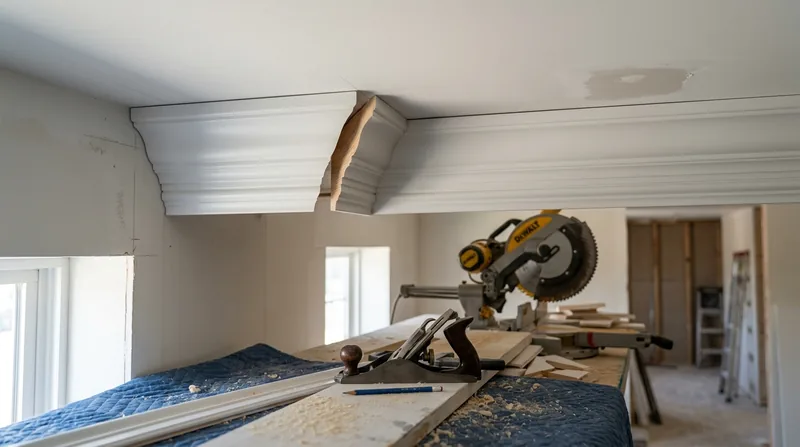




Crown molding and baseboards are the finishing details that define a room, and in Houston's diverse housing stock, they demand precision and respect for period context. From the soaring ceilings and Victorian crown profiles of the Houston Heights and River Oaks estates to the clean, modern lines that suit the mid-century ranches of Meyerland and the brick-veneer tracts across Katy and Sugar Land, crown molding and baseboard installation in Houston requires both craftsmanship and an eye for what each home's architecture deserves. Our crew handles coped joints, scribing to uneven walls, and clean caulk lines that read true in natural light. We match existing Victorian or Craftsman profiles, install chair rail and window casing with the same care, and work to the standards that make trim work visible and worth noticing. In a humid subtropical climate where seasonal wood movement is constant and walls rarely sit perfectly plumb or square, proper installation means accounting for that reality from the start.
Why Crown Molding and Baseboard Installation Matters in Houston Homes
Trim work is not decorative filler. It covers the transition between wall and ceiling, protects the base of walls from damage, and anchors the visual proportion of every room. In Houston's older pier-and-beam homes, where floors settle and walls rack slightly out of square over decades, baseboard and crown molding hide gaps, uneven transitions, and the real movement of the structure beneath. In newer suburban homes built on clay-heavy Gulf Coast soil that swells and shrinks with seasonal moisture, baseboards absorb the stress of that movement and spare the wall finish. Proper installation also means understanding how to caulk and finish trim so that seasonal wood movement does not crack the paint line or telegraph every shift in humidity.
- Crown molding establishes ceiling height and room proportion, and a coped joint at inside corners reads far cleaner than a miter that gaps and shrinks.
- Baseboards protect wall base from vacuum cleaners, furniture, and floor moisture, and they hide the joint between flooring and drywall.
- Chair rail and wainscoting add visual weight and period authenticity to Craftsman and Victorian homes, and they break up tall walls in modern open-plan layouts.
- Window casing frames openings and seals the rough edges of the rough opening, and scribing the casing to match existing wall texture keeps the line clean.
- Proper caulking and paint finish mean the trim stays tight as wood and drywall move with humidity and temperature swings across Houston's hot, wet summers and mild winters.
Quality trim installation pays for itself in the resale value and livability of the home, and it sets the tone for every room.
Key info: Houston's humid subtropical climate means wood in trim work will move with the seasons. We account for that movement when we install, and we caulk and finish in ways that let the wood move without cracking the paint line. In a River Oaks estate or a Heights bungalow, that attention to detail is the difference between trim that stays tight for decades and trim that splits and gaps after the first hot summer.
For more detail on how structural movement affects interior finishes, see our guide to finish and trim carpentry in Houston.
How We Install Crown Molding and Baseboards in Houston
Our process starts with a walk-through to understand the room, measure the walls, identify any out-of-square corners or uneven surfaces, and confirm the profile and finish you want. We then cut and fit each piece on site, using coped joints at inside corners rather than miters so that wood movement does not open gaps. We scribe baseboards and casing to match existing wall texture or uneven drywall, and we use shims and blocking to bring trim into true plumb and square before fastening. Caulking happens before primer and paint, and we sand between coats to ensure a finish line that reads clean in daylight.
- We measure and cut all trim on site to account for walls that are out of square, uneven, or that have settled over time.
- We use coped joints at inside corners and scribing where trim meets an uneven wall, so the fit is tight and gaps do not form as wood moves.
- We fasten trim with finish nails or screws, and we fill nail holes and gaps with paintable caulk before primer and paint.
- We coordinate with your painter or handle priming and caulking ourselves, depending on your preference and the scope of the room.
- We work room by room or across the whole house, and we protect floors and existing finishes as we go.
The result is trim that sits flush, reads true in natural light, and stays tight through Houston's seasonal humidity swings.
Example: A Meyerland mid-century ranch with original 2.5-inch baseboards and no crown molding wanted 5-inch crown added to the living and dining rooms. The walls were out of square by nearly half an inch over 12 feet. We scribed the crown to the ceiling and coped the inside corners so that the profile reads continuous around the room. The baseboards were re-finished to match the new crown, and caulk lines were painted to blend the old and new trim into a single, cohesive finish. The room now reads taller and more refined, and the trim will not gap as the house settles further.
See our full approach to finish carpentry and trim work in Houston.
Methods and Approaches for Crown Molding and Baseboard Installation
| Approach | Description | Best For |
|---|---|---|
| Coped Joint Crown | Inside corners are cut with a coping saw to fit the profile of the mating piece, creating a joint that moves independently as wood shrinks and swells. | Period homes and any room where tight joints matter; standard practice in professional trim work. |
| Scribing to Uneven Walls | Trim is fit and scribed to match the contour of an existing wall or ceiling, so gaps are eliminated and the trim reads true against the surface. | Homes with settled frames, uneven drywall, or where new trim meets old walls that are not plumb or level. |
| Blocking and Shimming | Solid blocking is installed behind trim to provide a solid nail base and to bring the trim into true plumb and square before fastening. | Out-of-square rooms, pier-and-beam homes, and any installation where the trim must be held true against movement in the framing. |
| Profile Matching and Custom Milling | Existing trim profiles are matched by measurement and sample, and custom milling is arranged if stock profiles do not match period details. | Victorian, Craftsman, and historic homes where original trim must be matched, and where custom or reproduction profiles are required. |
| Caulk and Paint Coordination | All gaps, nail holes, and joints are filled with paintable caulk before primer and paint, and caulk lines are sanded and finished to blend seamlessly. | All installations; caulking is essential so that trim movement does not crack the paint line or telegraph gaps under natural light. |
Crown Molding and Baseboard Installation Cost in Houston: What to Expect
Crown molding and baseboard installation in Houston starts at around $450 for a single room, depending on the linear footage, profile complexity, and the condition of the walls and ceiling. A standard 12-by-14-foot bedroom with baseboards, chair rail, and simple crown molding typically runs $800 to $1,200. A full-house installation across multiple rooms, especially in a home where walls are out of square or where profiles must be matched to existing trim, can range from $3,000 to $8,000 or more. The main factors that affect cost are the linear footage, the complexity of the profile (simple ranch baseboards cost less than ornate Victorian crown), the condition of the walls (scribing to uneven surfaces takes more time), and whether existing trim must be matched or removed and replaced.
Getting two or three estimates is always wise. Each carpenter will assess the room differently, and a low estimate might reflect shortcuts like butt joints instead of coped joints, or caulking that will gap after the first summer. Our estimate is free and no obligation. We walk the room, measure, discuss profile and finish, and give you a clear price before we start work. For a detailed pricing breakdown and examples of what different scopes cost, see our full pricing guide.
Cost example: A River Oaks estate with 3,500 square feet and original 1920s Victorian crown and baseboards in every room needed crown molding added to the master suite and dining room, and baseboards refreshed throughout. The custom profile matching and coping work ran $6,500 total. A Pearland ranch with 2,000 square feet of post-war construction wanted simple 3.5-inch baseboards in four rooms and no crown, which came to $1,200. Scope, profile, and existing conditions drive the number.
Crown Molding and Baseboard Installation Near Me: What Houston Homeowners Should Know When Hiring
Hiring a carpenter for trim work means finding someone who understands both the craft and your home. In Houston, where we have everything from 1920s Heights bungalows to brand-new Woodlands estates, the trim work must match the house and the homeowner's vision. A carpenter should be fully insured and able to show proof of coverage. They should give you a clear, written estimate before starting, and they should be able to explain their method, especially how they handle coped joints, scribing, and caulking. Ask for references from recent trim work, and call them. Ask to see a photo or visit a finished room. A good carpenter will want to walk the space with you, take measurements, and discuss the profile and finish before quoting a price.
- Verify that the carpenter is fully insured and can provide proof of liability and workers comp coverage on request.
- Get a detailed, written estimate that lists the linear footage, profile type, whether joints are coped or mitered, and the finish (primer, paint, stain, or sealed natural).
- Ask how the carpenter will handle out-of-square corners, uneven walls, and seasonal wood movement, and listen for answers that show experience with Houston homes.
- Request references and follow up with at least two previous customers to ask about the quality of the finish, the timeline, and whether the trim has stayed tight over time.
- Understand that some trim work may require a permit if it alters the structural appearance of a historic home or HOA-protected property; the carpenter should discuss this with you upfront and coordinate with your local building department or HOA if needed.
- Confirm the timeline and whether the carpenter will handle caulking and primer, or whether you will coordinate with a painter separately.
The right carpenter will make the process straightforward and the result will be trim that enhances your home for decades to come.
Ready to discuss your trim project? Contact us for a free estimate, or call (832) 462-7903.
Crown Molding & Baseboard Installation in Houston: Pricing Guide
| Service | Price | Details |
|---|---|---|
| Single room crown or baseboard | Starting at $450 | Includes measure, cut, install, caulk and prep for paint in one standard room up to 400 linear feet |
| Multi-room installation | Starting at $1,200 | Four to six rooms with baseboards and crown, coped joints, scribing to uneven walls, and finish prep included |
| Profile matching and custom milling | Starting at $1,500 | Custom trim profiles to match Victorian or Craftsman originals, or reproduction milling for period-accurate detail work |
| Full house installation | On estimate | Entire home trim scope requires on-site walk to assess wall condition, profile complexity, and existing details before pricing |
| Travel | Included | No separate mileage or travel fee within Houston and surrounding service areas |
| Free estimate | Free | Detailed written estimate provided within 24 hours, no obligation to book, call (832) 462-7903 |
Indicative pricing, the exact cost depends on square footage, finish, and site access. Free personalized estimate within 24h at (832) 462-7903.


