Carpenter in Houston, TX: Wood Rot, Structure & Finish Work
Homeowners searching for a carpenter near me in Houston are usually looking at one of two things: wood that has gone soft, or wood that needs to be made to fit. Houston Carpentry does both, from rot and insect damage repair through floor and beam work to trim, cabinets and custom built-ins, across Houston, Katy, Sugar Land, The Woodlands, Pearland and the surrounding area.
The building stock here is almost entirely wood frame, and it lives in fog and salt air. Victorians and Edwardians carry original millwork worth matching, and a century of settling behind it. Book a free wood rot inspection and we will tell you what the wood actually needs.
Why Wood Fails in Houston, and How We Read It
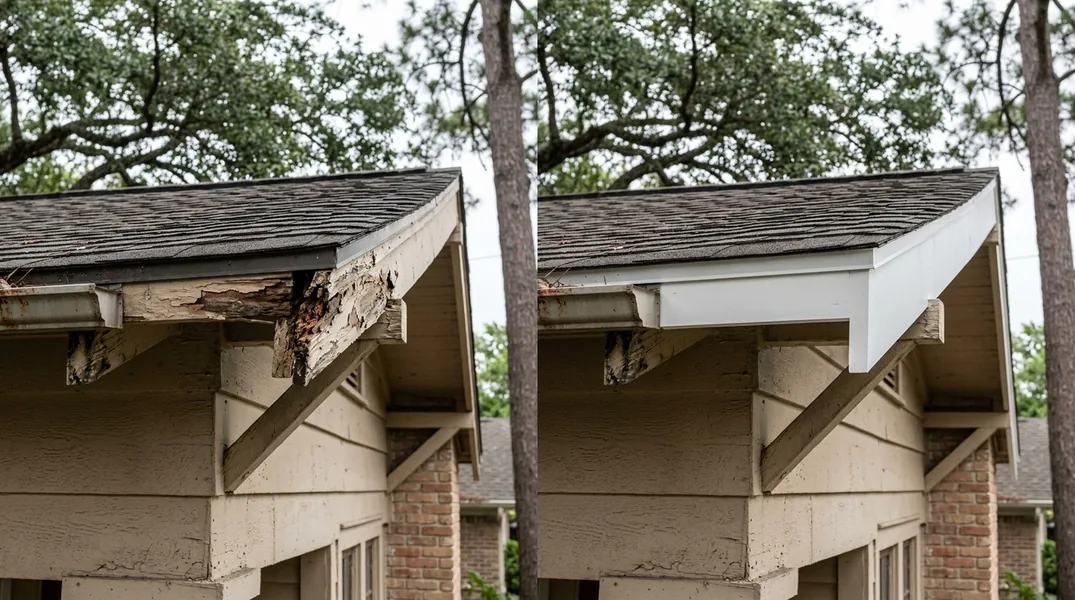
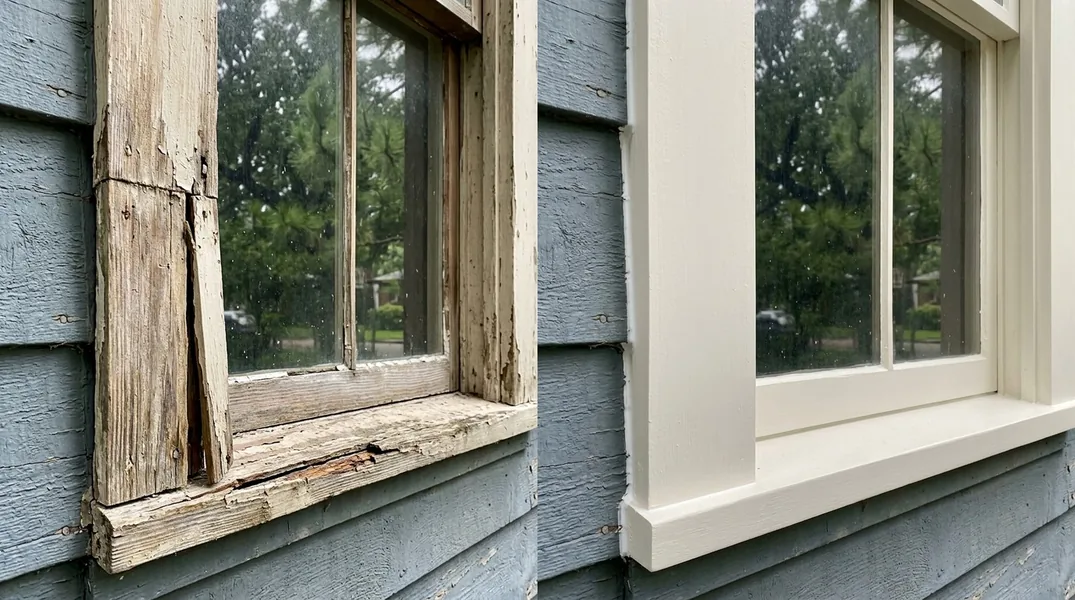
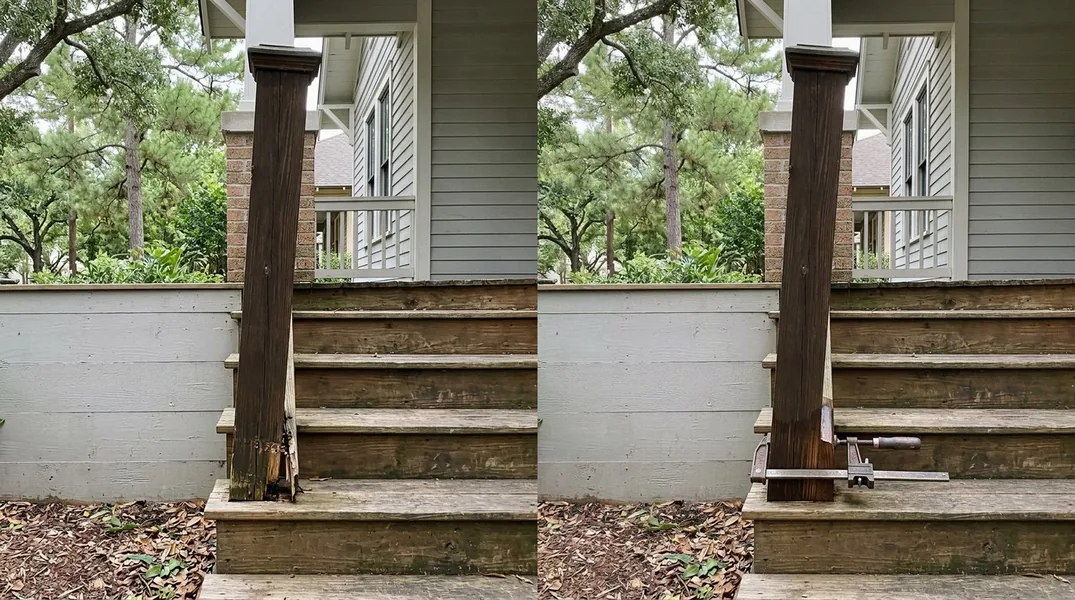
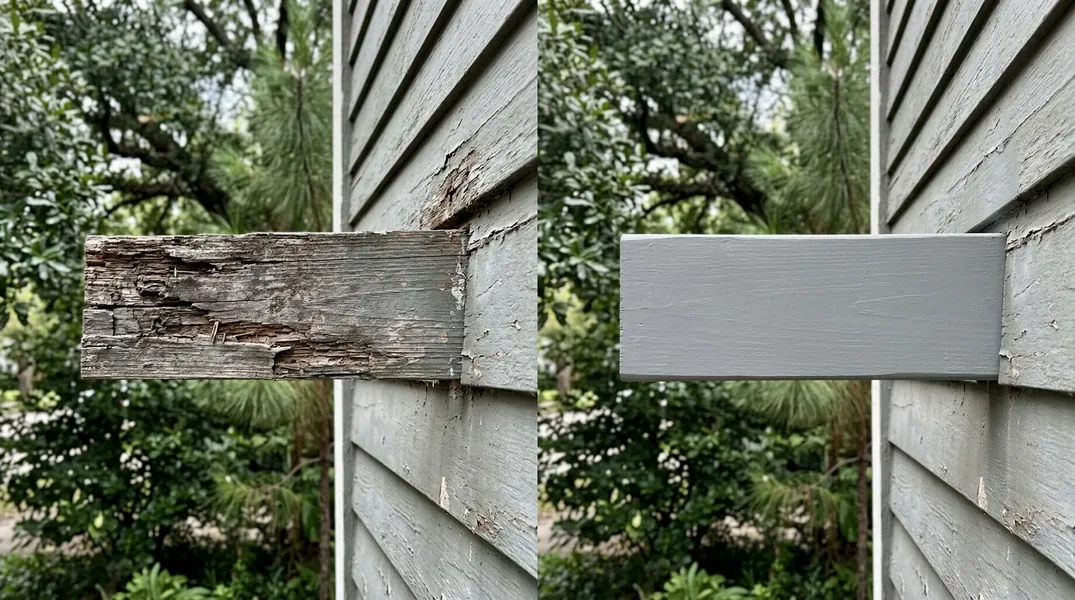
Dry rot is a fungus, and what it needs is sustained moisture rather than standing water. A fog belt supplies exactly that, year-round, which is why decay here is a structural fact of life rather than a seasonal event. Wet rot shows up where water sits: sills, window sills, thresholds, deck ledgers and the base of exterior trim.
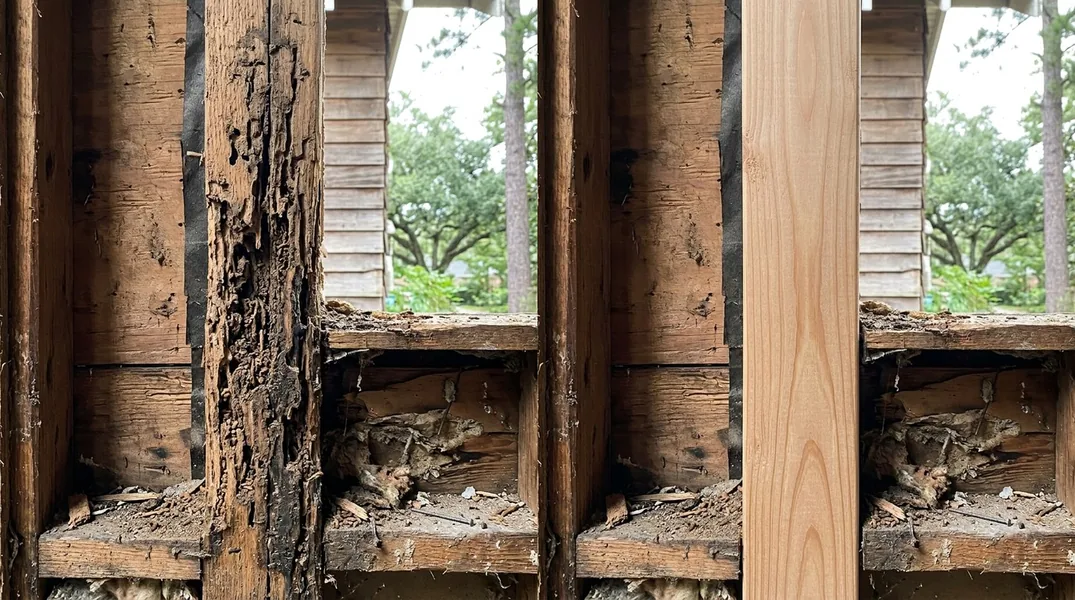
Insect damage reads differently. Termites and beetles hollow a member from the inside while the paint film on the outside still looks sound, so the surface tells you very little. We probe to find where sound wood begins, look behind the visible surface at the framing, and trace the water path that fed the decay. Call (832) 462-7903 and we will walk it with you.
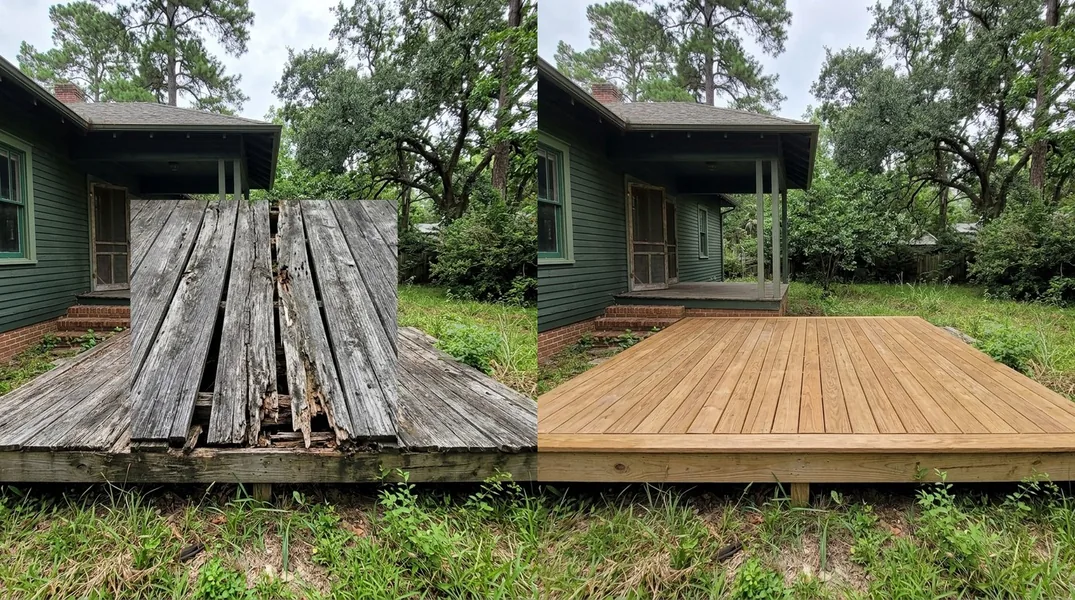
Then we give you the honest call. Surface decay on a member that still has its section can be cut back and rebuilt. A member that has lost its section gets replaced. Filler over rot is not a repair, and if the water source stays open the repair fails again. On insects we stay in our lane: we rebuild the damaged wood from your own pest inspection report, and we do not treat, fumigate or perform pest control, which is a separate regulated trade. Get in touch when you want a straight answer.
Structural Carpentry in Houston: Joists, Beams and Settling
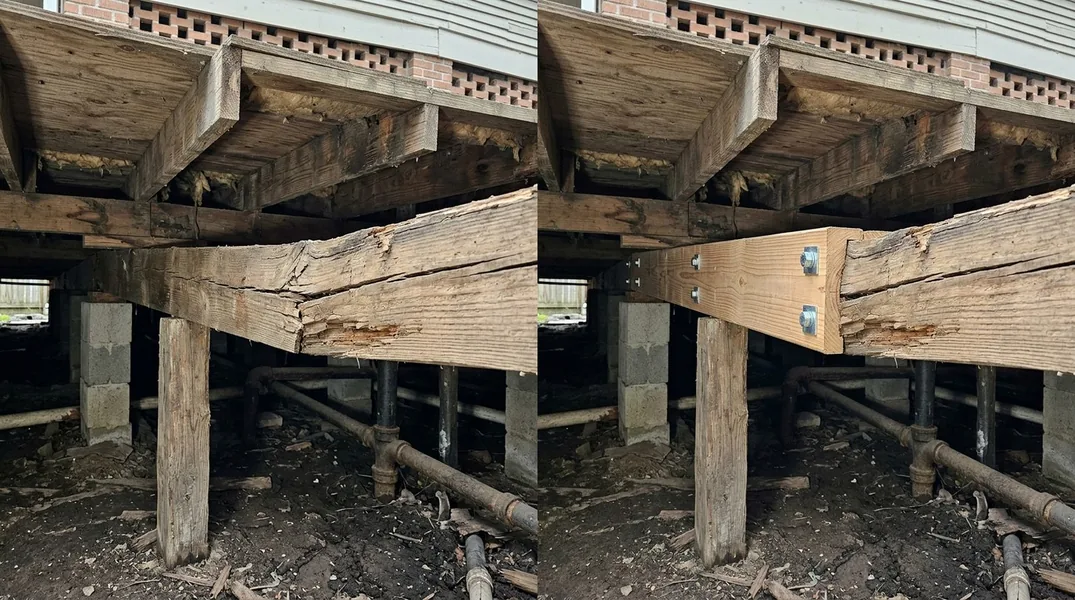
Under the finish surface, the work is joists, subfloor, sill plates and rim joists. A joist with sound material left can be sistered, which means bolting a new member alongside it to carry the load; one that has lost too much section is replaced outright. Subfloor sections come out the same way, and floors get brought back toward level before anything goes back down.
A sloping floor in a hundred-year-old building is usually settling, not failure. What matters is whether anything is still moving and how the member is doing where it bears. For beams, headers and removing a load-bearing wall, the sizing commonly requires drawings from a licensed structural engineer and a permit from the local building department. We build to those drawings; we do not produce them.
Finish Carpentry and Built-Ins in Houston Homes
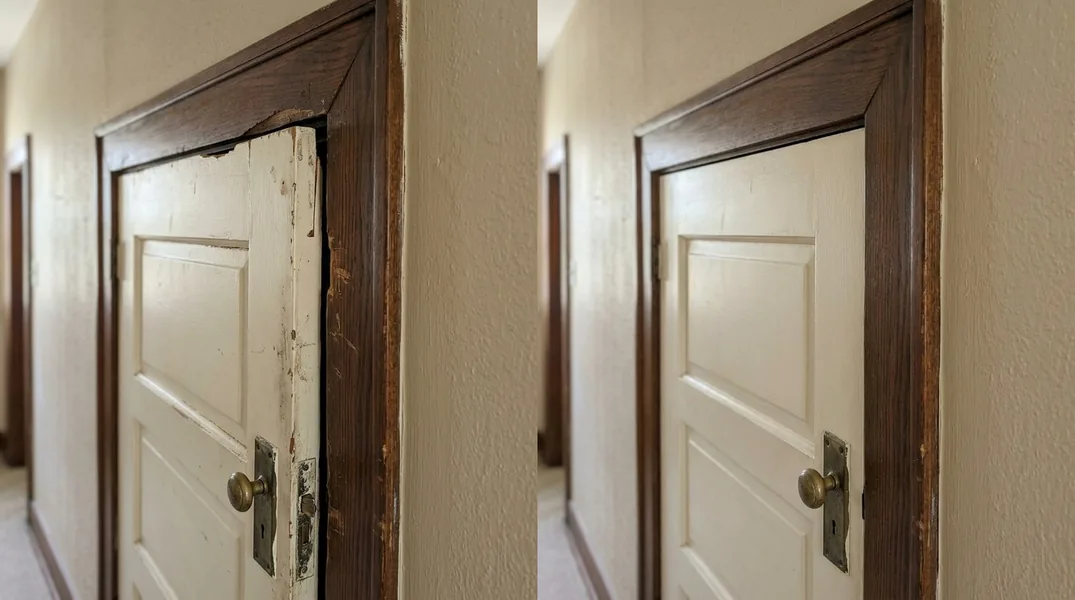
Finish carpentry is where the difference between a carpenter and a handyman becomes visible: coped joints on inside corners instead of a bead of caulk, casing scribed to a wall that is neither flat nor plumb, and reveals that stay consistent the length of a run. Casing, baseboard, crown molding and wainscoting are matched to the profiles the house already has when the original stock is worth keeping.
Built-ins are the same discipline applied to space. Bookshelves, window seats, media walls and closet systems are built for the alcove, the bay window or the sloped ceiling that is actually there, rather than shimmed into a stock size. Cabinets, doors and stairs follow: leveled, scribed, hung and adjusted in openings a century of settling has moved.
Permits, Repair-or-Replace & What We Do Not Do
Permit requirements follow the scope of work. In most jurisdictions structural work such as removing or altering a load-bearing wall, replacing beams or joists, or rebuilding a deck or a stair commonly requires a permit and an inspection, but thresholds and fees vary. Requirements vary, so always verify with the Houston building department before starting your project.
On repair versus replacement, the criteria are simple enough to state: how much sound section the member has left, whether the water source can actually be closed, and what the two numbers compare to. Where both are real options we quote both. On what we do not do, we would rather be explicit: we are fully insured carpenters, we do not perform pest control or termite treatment, we do not provide engineering drawings or mold remediation, and where damage may be covered we can document what we found for your insurer without making any promise about the outcome of a claim. Contact us and we will tell you which of those your project touches.