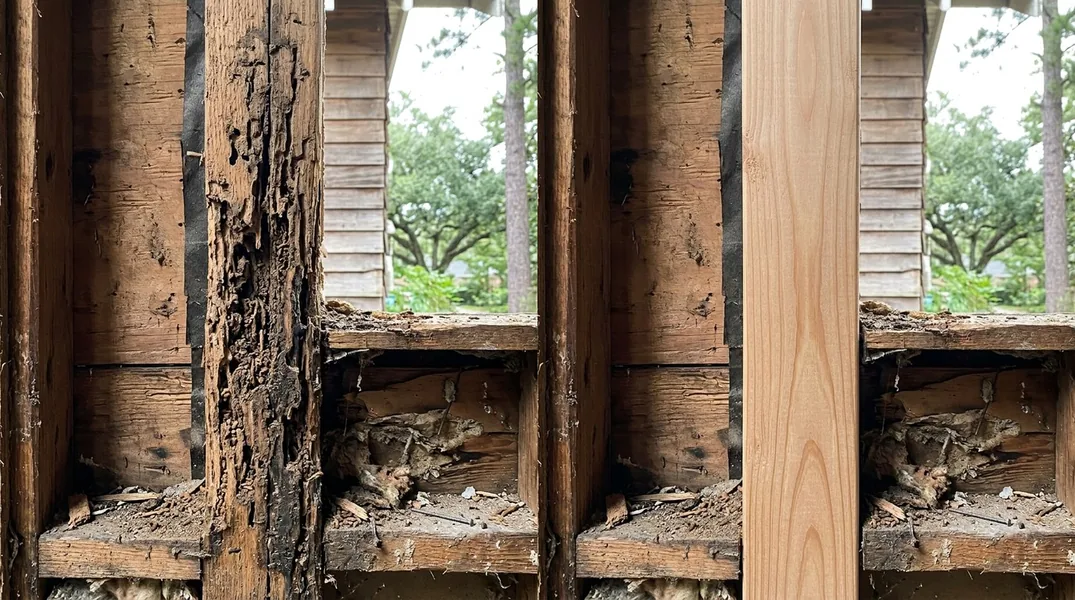
Why Houston's Climate Makes Wood Rot and Termite Damage So Common
Houston homeowners face a unique challenge when it comes to protecting their properties from wood-destroying pests and decay. The city's subtropical climate, combined with high humidity and frequent rainfall, creates an ideal breeding ground for both termites and the fungal conditions that lead to wood rot. Unlike drier regions where wood remains relatively stable, Houston homes are constantly battling moisture intrusion, which weakens wooden structural elements from the inside out.
The problem starts with moisture. When wood stays damp or wet for extended periods, it becomes susceptible to fungal growth that causes dry rot. At the same time, the warm temperatures and moisture create perfect conditions for subterranean termites, which are far more common in Texas than other termite species. These insects don't just eat wood; they tunnel through it systematically, leaving behind hollowed-out galleries that compromise the structural integrity of beams, joists, and support posts. Many homeowners don't realize they have a problem until significant damage has already occurred, which is why early detection and professional Termite Damage Repair services are so critical.
Signs of Termite Damage Every Houston Homeowner Should Know
Understanding the signs of termite damage is your first line of defense against costly repairs. One of the most obvious indicators is the presence of mud tubes along foundation walls, basement walls, or crawl space supports. These pencil-thin tunnels are built by subterranean termites as they travel between their underground colonies and the wood they're feeding on. If you spot these tubes, it's a strong signal that termites are actively working inside your home right now.
Other warning signs include hollow-sounding wood when you tap on it, wood that crumbles easily under pressure, or paint that bubbles or peels in unusual patterns. You might also notice sagging floors or doors that no longer close properly, as termites weaken the structural supports beneath them. Swarmers, which are winged termites that emerge during spring and early summer, are another red flag. If you see these insects inside your home or around exterior lights, a termite infestation is likely present. The key is not to ignore these symptoms. The longer termites work undetected, the more expensive your eventual Termite Damage Repair bill will become.
Wood Rot Damage: The Silent Destroyer of Houston Homes
Wood Rot & Dry Rot Repair is one of the most frequently requested services we provide at Houston Carpentry because dry rot is such a pervasive problem in our region. Unlike termite damage, which is caused by living insects, wood rot is caused by fungal decay that thrives in damp conditions. The fungi essentially eat the cellulose in wood, turning solid lumber into soft, crumbly material that can't support weight or resist stress.
Dry rot typically starts in areas where water penetrates the home: around windows and doors, under roof eaves, in bathrooms and kitchens, and in crawl spaces or basements. You might notice wood that feels soft or spongy, discoloration or dark staining, or a musty odor emanating from affected areas. The insidious nature of wood rot is that it can spread internally long before you see visible damage on the surface. By the time you notice the problem, the decay may have already compromised structural elements like floor joists, rim boards, or support beams. Professional Wood Rot & Dry Rot Repair services are essential to halt the decay, remove damaged wood, and restore your home's structural integrity.
Structural Repairs: Floor Joists, Beams, and Load-Bearing Walls
When termite and wood rot damage reaches the structural skeleton of your home, you're looking at more involved repairs than simple cosmetic fixes. Floor Joist & Subfloor Repair is one of the most common structural repairs we perform for Houston homeowners. Floor joists are the horizontal beams that support your floors, and when they're compromised by termites or rot, your floors may sag, bounce, or feel unstable underfoot. Replacing damaged joists requires careful assessment, temporary support systems, and precise installation to ensure your floors are level and safe once more.
In cases where damage extends to primary structural elements, you may need Beam Replacement & Load-Bearing Wall Removal services. Support beams and load-bearing walls are responsible for distributing the weight of your entire home, so any compromise to these elements is a serious structural concern. These repairs demand professional expertise, proper permits, and often temporary support structures during the replacement process. Attempting DIY repairs on structural components is dangerous and will likely fail inspection. Houston Carpentry has the experience and licensing to handle these complex repairs safely and correctly, ensuring your home's safety and your peace of mind.
Termite Repair Cost in Houston: What to Budget
One of the first questions homeowners ask is about termite repair cost. Unfortunately, there's no single answer because repair costs depend on several factors: the extent of the damage, which structural elements are affected, and how long the infestation has been active. A small, localized infestation caught early might cost a few hundred dollars to repair, while extensive damage affecting multiple support beams or floor joists could run into thousands. The best way to understand your specific situation is to schedule a professional inspection, which is often the first step toward getting an accurate estimate.
At Houston Carpentry, we provide transparent pricing and detailed estimates so you know exactly what you're paying for before work begins. We recommend getting a free estimate from a qualified contractor who can assess your home and provide a comprehensive breakdown of labor, materials, and timeline. Keep in mind that delaying repairs almost always increases costs. Termites and wood rot don't stop working just because you're not ready to address them. The damage compounds, spreading deeper into structural elements and becoming exponentially more expensive to fix. Investing in prompt, professional repairs now will save you significantly more money in the long run.
How to Prevent Termite and Wood Rot Damage in Your Houston Home
Prevention is always more cost-effective than repair. The first step is moisture management. Ensure your gutters and downspouts are clean and directing water at least four feet away from your foundation. Check for leaks around windows, doors, and roof penetrations, and repair them promptly. Inside your home, use exhaust fans in bathrooms and kitchens to reduce humidity, and consider a dehumidifier in basements or crawl spaces. Proper ventilation and moisture control dramatically reduce the likelihood of both termite infestations and wood rot development.
Second, eliminate termite entry points. Subterranean termites need direct contact with soil to survive, so keep wood elements of your home (siding, deck posts, trim) at least six inches above ground level. Remove mulch and wood debris from around your foundation, and consider having a professional termite inspection annually. Many pest control companies offer preventative treatments that create a barrier around your home's foundation. Third, address any existing water damage immediately. If you notice signs of water intrusion, soft wood, or musty odors, don't wait. Contact Houston Carpentry at (832) 462-7903 to schedule an inspection and protect your home from escalating damage. Taking these preventative steps now can save you tens of thousands of dollars in future repairs.
Looking for a professional carpentry contractor in Houston? Houston Carpentry responds fast for all your carpentry needs.
Get a Free QuoteOur services: Wood Rot & Dry Rot Repair · Termite Damage Repair · Floor Joist & Subfloor Repair