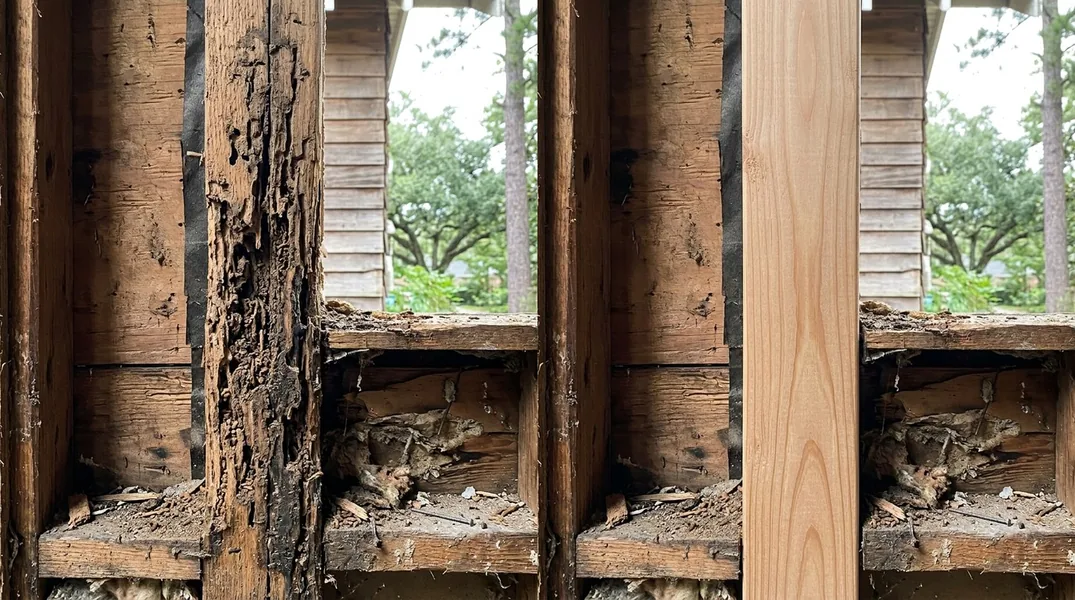
The Hard Truth: Why Wood Rot and Termite Damage Aren't Usually Covered
If you've discovered wood rot or termite damage in your Houston home, your first instinct might be to call your homeowners insurance company. Unfortunately, the answer you'll likely receive is disappointing: most standard homeowners insurance policies do not cover either wood rot or termite damage.
This exclusion exists because insurance companies view both conditions as preventable through regular home maintenance. From their perspective, wood rot develops gradually over time due to moisture exposure and neglect, while termite infestations are considered a pest control issue rather than sudden property damage. Since homeowners are expected to maintain their properties and address pest problems promptly, insurers treat these damages as maintenance failures rather than insurable events. Understanding this distinction is critical before you file a claim or assume your policy will cover expensive repairs.
Understanding Your Homeowners Insurance Policy: What's Actually Covered
Homeowners insurance policies are designed to cover sudden, accidental damage to your home's structure and contents. This typically includes damage from fire, theft, storms, and vandalism. However, damage that occurs gradually over time, such as water damage leading to wood rot or pest infestations, falls outside the scope of standard coverage. The key distinction insurers make is between sudden loss and gradual deterioration.
That said, there are rare exceptions. If wood rot develops as a direct result of a covered event (such as damage from a burst pipe covered under your water damage provision), you might have a case for a claim. Similarly, if termites cause damage that triggers structural failure, some policies may offer limited coverage for the structural damage itself, though not for the termite treatment. The best approach is to review your specific policy documents or speak directly with your insurance agent. Many homeowners in Houston are surprised to learn that their coverage is more limited than they assumed, which is why proactive inspection and maintenance matter so much.
When You Might Have a Valid Insurance Claim
Although standard policies exclude wood rot and termite damage, there are specific scenarios where you could file a legitimate claim. The most common situation involves secondary damage caused by a covered peril. For example, if a storm damages your roof and allows water to infiltrate your home, resulting in wood rot in the attic framing, you may be able to claim the damage caused by the water intrusion. In this case, the underlying cause (the storm) is covered, even though the resulting rot might not be.
Another potential avenue is if you have an endorsement or rider on your policy that specifically covers water damage or moisture-related issues. Some homeowners purchase additional coverage for water damage, which can sometimes include rot damage if it stems from a covered water event. Additionally, if termite damage causes structural failure that triggers coverage for structural damage, you might recover some costs, though this is uncommon. Before pursuing any claim, document everything thoroughly with photos and have a professional assessment completed. If you're unsure whether your situation qualifies, contact your insurance agent with specific details about how the damage occurred.
The Real Cost of Ignoring Wood Rot and Termite Damage
Since insurance won't cover these issues, homeowners must budget for repairs themselves. The longer you wait to address wood rot or termite damage, the more expensive the repairs become. What starts as a small area of soft wood can spread throughout your home's structural components, affecting floor joists, beams, and load-bearing walls. Early detection and swift action are your best financial strategy.
Wood Rot & Dry Rot Repair costs vary depending on the extent of the damage and which structural elements are affected. Floor Joist & Subfloor Repair can be particularly expensive if the damage has compromised the home's foundation support system. Similarly, Termite Damage Repair often requires both pest treatment and structural restoration. For detailed information about what you can expect to invest, check out our pricing page or request a free estimate from Houston Carpentry. We'll assess your specific situation and provide an accurate quote so you know exactly what you're facing.
Protecting Your Home: Prevention and Early Detection
Since insurance won't bail you out, your best defense is prevention and early detection. Regular home inspections are your first line of defense against both wood rot and termite damage. Look for signs of moisture accumulation around your foundation, under sinks, and in crawl spaces. Check wooden components for soft spots, discoloration, or a musty odor. For termites, watch for mud tubes on exterior walls, hollow-sounding wood, or discarded wings near windows and doors.
Maintain proper drainage around your home's foundation, ensure gutters are clean and functioning, and address any water leaks immediately. Keep mulch and soil away from wooden siding, and maintain adequate ventilation in attics and crawl spaces. If you suspect termites, consider having a professional pest inspection annually, especially in humid climates like Houston where termites thrive. If you notice any signs of wood damage or structural issues, don't delay in getting a professional evaluation. Houston Carpentry can assess the damage and recommend the best course of action before the problem becomes catastrophic.
What to Do If You Discover Wood Rot or Termite Damage
If you've found wood rot or termite damage in your home, take action immediately. First, contact a pest control professional if termites are involved, as you'll need treatment to stop the infestation. Simultaneously, have a qualified carpenter or structural contractor inspect the damage to determine the scope of repairs needed. Document everything with photos and written notes about when you first noticed the problem and any contributing factors like water leaks or moisture issues.
Next, contact your homeowners insurance company to report the damage, even though coverage is unlikely. Provide them with all documentation and the professional assessment. While they'll probably deny the claim, having it on record is important for your file. Then, focus on getting the repairs done. Delaying structural repairs can lead to safety hazards and exponentially higher costs down the road. Houston Carpentry specializes in Beam Replacement & Load-Bearing Wall Removal and other structural repairs needed after wood rot or termite damage. We recommend calling us at (832) 462-7903 to discuss your situation and get started on repairs as soon as possible. The sooner you address the problem, the more money you'll save in the long run.
Looking for a professional carpentry contractor in Houston? Houston Carpentry responds fast for all your carpentry needs.
Get a Free QuoteOur services: Wood Rot & Dry Rot Repair · Termite Damage Repair · Floor Joist & Subfloor Repair